
Our process
Each stage from melting to dispatch. The colour indicates the temperature of the metal; the figures are those stated for our plant.
- 13
- Stages
- 1400°C
- Reheating to
- All
- Stages in-house
-
01
Melting and ingot casting
Steel is melted and teemed into moulds to produce the ingot that every later stage works from.
Composition is set here. Everything after it breaks down what the casting left behind: the shrinkage and porosity forging removes and a casting keeps.
-
02
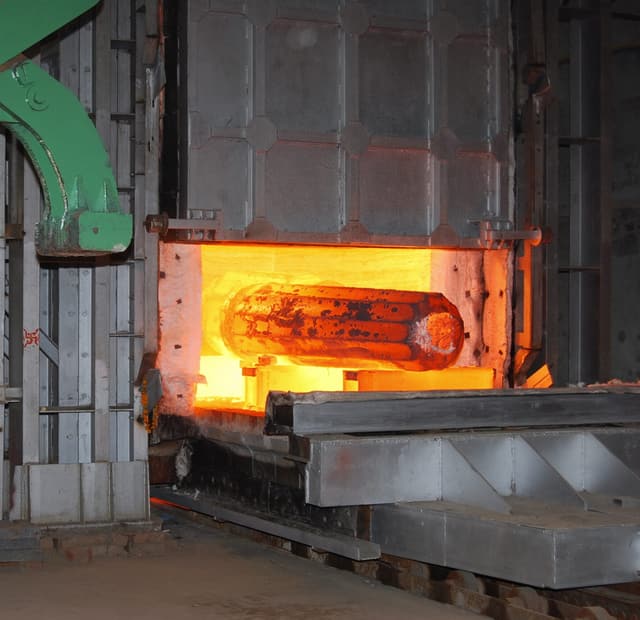
Reheating and soaking
The charge is brought up to forging temperature and held until the heat has reached the centre.
Two rail-bound manipulators load and draw the furnace, so a heavy ingot is not losing temperature in the bay waiting for a crane.
-
03
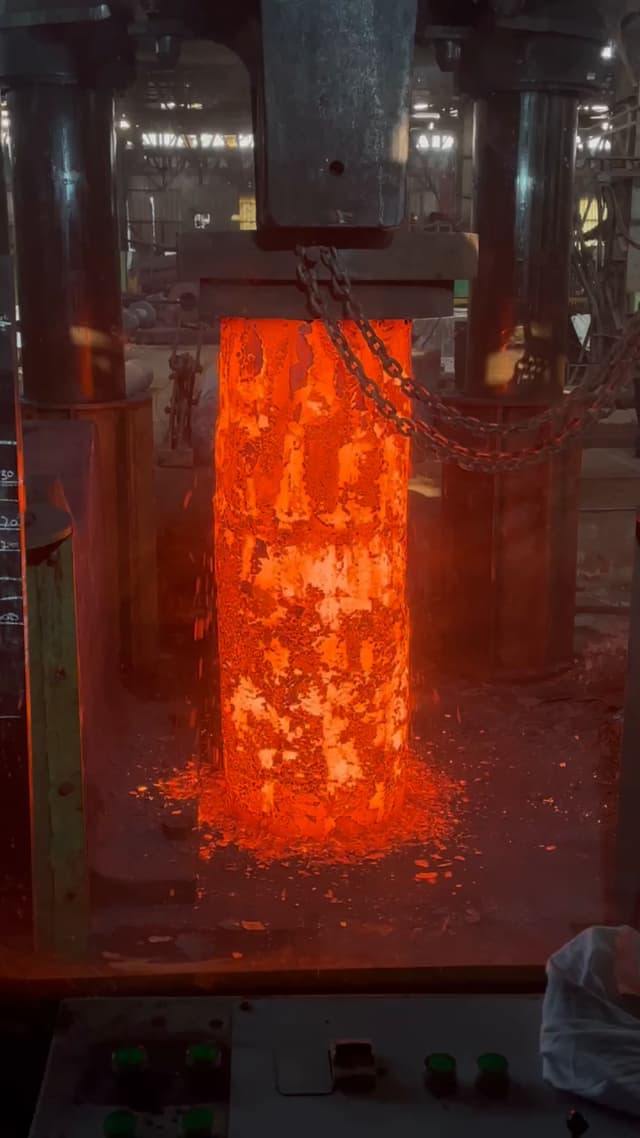
Upsetting
The ingot is stood on end and compressed under the press, spreading it and beginning to break down the cast structure.
Reduction in the other direction: it is how a short, fat piece becomes a long one with the grain running the right way.
-
04
Blooming and cogging
Flat dies work the piece down along its length in successive passes, into a square bloom or a round.
Small reductions, repeated the length of the piece. The ratio between ingot and finished section decides how sound the middle is.
-
5a
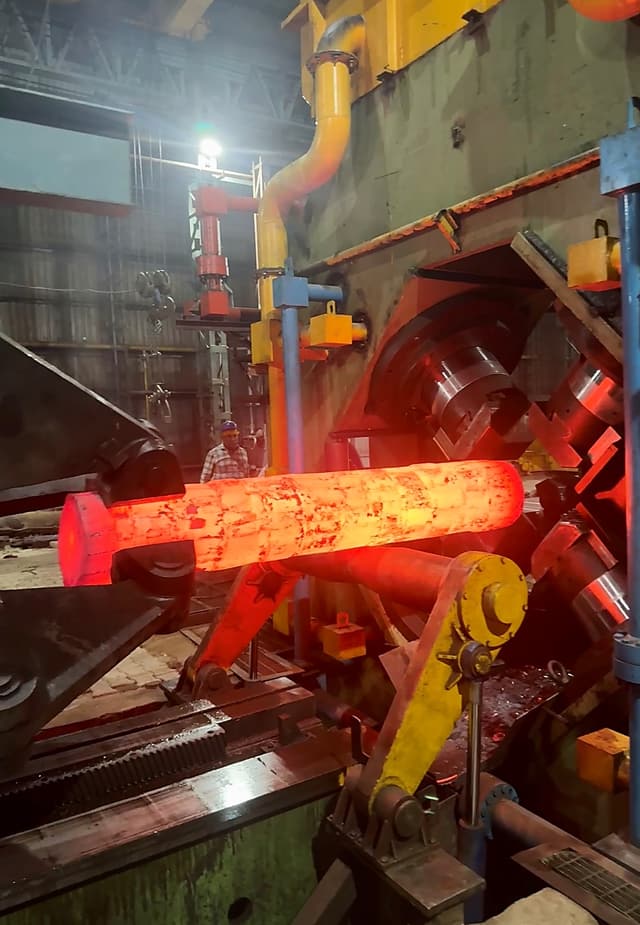
Radial forging
Four dies close on the bar in synchronised strokes while two manipulators rotate and feed it.
Long strokes at high frequency reach the core, not just the skin. It is the axle route: through-forged the whole length, and single, double or multiple axles from one heat.
-
5b
Press forging
Open-die work under the presses, with the manipulator holding and turning between strokes.
The route for anything that is not a long round — discs, blocks, step forgings, and whatever the 30 tonne-metre manipulator can hold.
-
5c
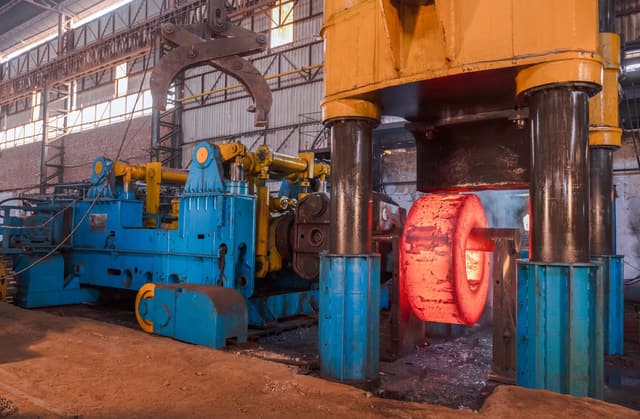
Ring forging
A pierced blank is opened out over a mandrel, growing in diameter with every stroke.
The grain follows the circumference instead of being cut across it. That is why a rolled ring outlasts one machined from plate.
-
06
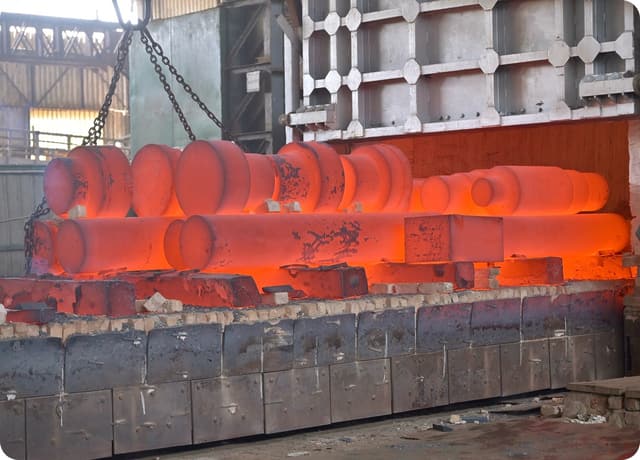
Normalising and annealing
The forging is reheated and cooled under control to refine the grain structure left coarse by forging.
Multi-zone monitoring is what makes this work on a sixteen-metre shaft: one end cannot be soaking while the other is still climbing.
-
07
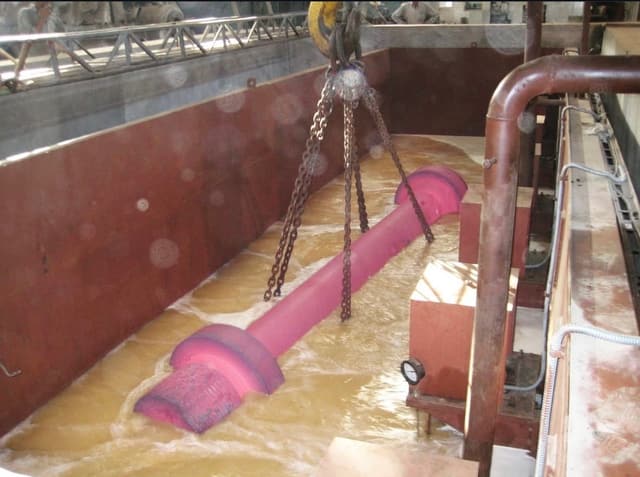
Quenching
Quenching in polymer or in oil, depending on the hardness and toughness required.
Polymer severity is adjustable and can be tuned to the section; oil cools more evenly and moves the part less. Which one a job takes is metallurgy, not preference.
-
08
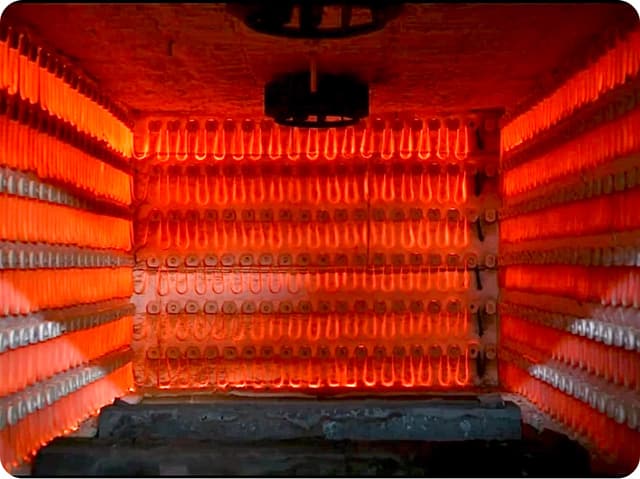
Tempering
A controlled low-temperature hold that relieves quenching stresses and sets the final properties.
Electric rather than gas, because at this end of the range the control matters more than the throughput.
-
09
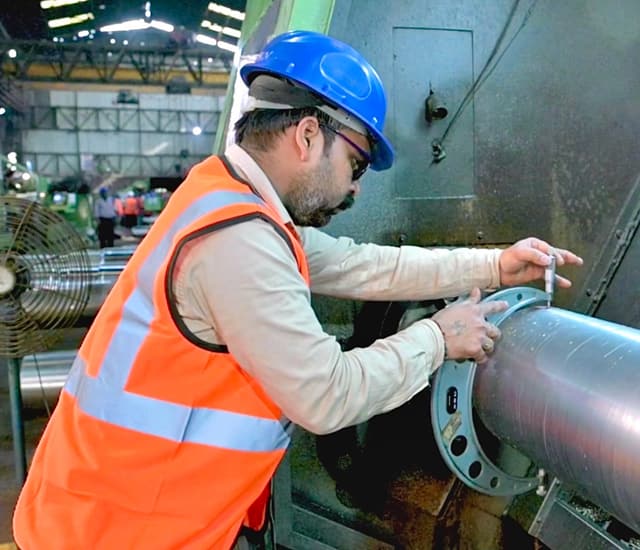
Testing
Ultrasonic and magnetic particle testing for internal and near-surface soundness; Brinell, impact and tensile testing for mechanical properties; CMM and profile projector for dimensions.
Eight machines, named on the quality page with their models. An audit asks for a model number, not the word “advanced”.
-
10
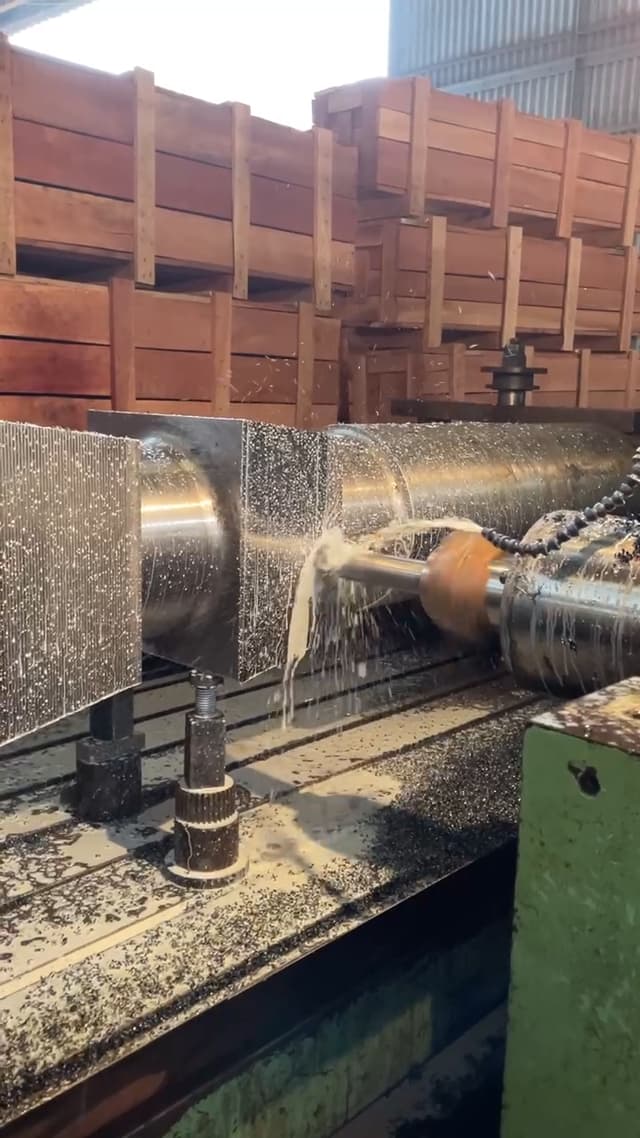
CNC machining
Turning, boring, milling, drilling and grinding, up to 16,000 mm between centres and Ø 5,000 mm on the vertical lathes.
The forging and the machining are in the same plant, which is why a part can leave here finished rather than as a rough shape somebody else has to schedule.
-
11
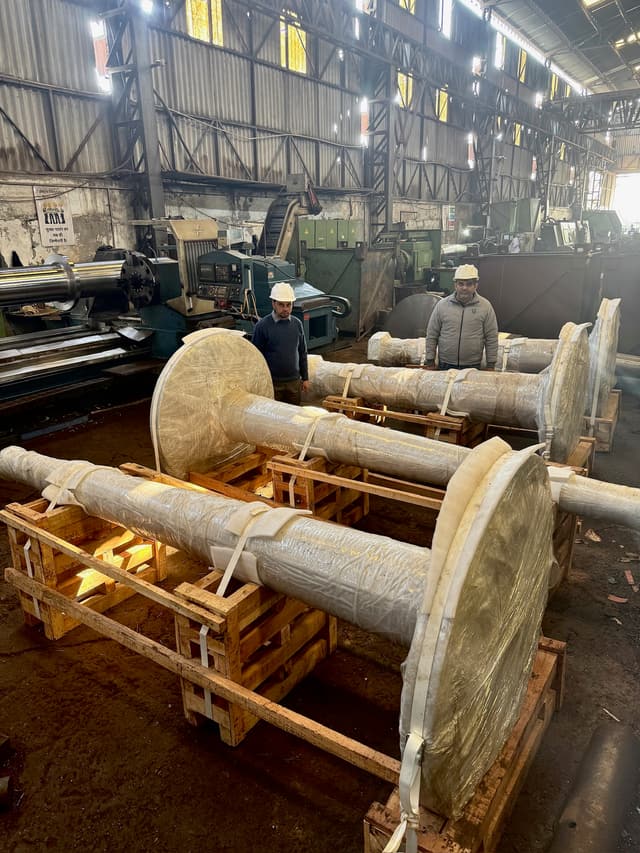
Inspection and dispatch
A final dimensional check, followed by crating and securing for transport.
Colour indicates the temperature of the metal. A temperature is printed only where the plant data states it; otherwise a dash is shown.
Send us your drawing
Tell us the shape, grade and quantity, and you will receive a reference number immediately.