Prakash Projects Pvt. Ltd. : Precision Manufacturing
In today’s rapidly evolving manufacturing industry, precision, efficiency, and reliability are essential for producing high-quality engineering components. Industries such as power generation, oil & gas, automotive, aerospace, and heavy engineering require components that are manufactured with extremely tight tolerances and high dimensional accuracy.
To meet these demanding requirements, modern manufacturers rely on advanced manufacturing technologies such as CNC Machining. Computer Numerical Control (CNC) machining has transformed the way complex metal components are produced by combining computer automation with high-precision machining tools.
Companies like Prakash Projects Pvt. Ltd. continue to adopt advanced machining technologies to deliver high-performance components that meet international quality standards. CNC machining enables manufacturers to produce complex parts with excellent accuracy, consistency, and efficiency, making it one of the most important processes in modern engineering.
What is CNC Machining?
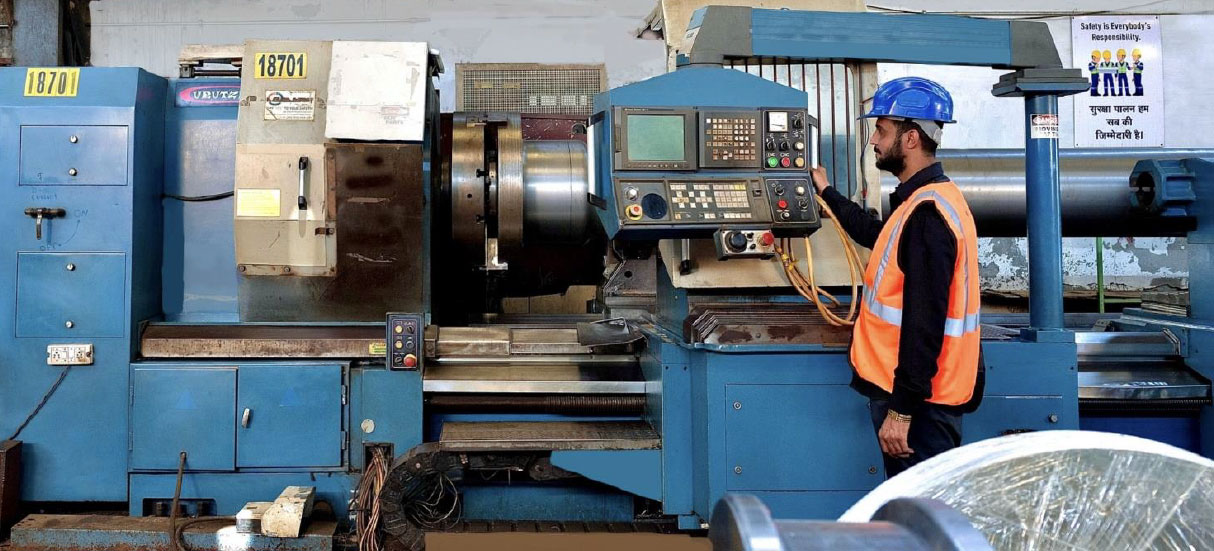
CNC machining is a manufacturing process in which pre-programmed computer software controls the movement of machinery and tools used to cut, shape, and finish metal or other materials. Unlike traditional machining, where operators manually control machines, CNC systems automate the process through computer instructions.
The CNC machine reads a digital design or program and performs precise operations such as cutting, drilling, milling, turning, and shaping the material into the desired component. Because the entire process is computer-controlled, CNC machining ensures high precision and repeatability.
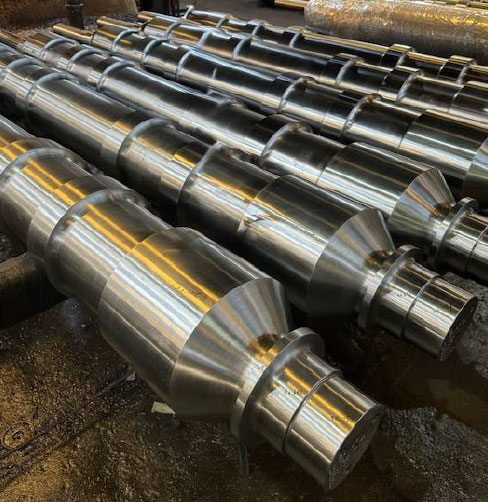
This technology is widely used for producing complex and high-accuracy components such as shafts, gears, machine parts, and industrial equipment.
Importance of CNC Machining in Modern Manufacturing
The demand for precision-engineered components has increased significantly in modern industries. Conventional machining methods often struggle to meet the strict tolerances and complex designs required by today’s industrial applications.
CNC machining solves these challenges by offering improved control, automation, and accuracy. Manufacturers can produce components with extremely tight tolerances while maintaining consistent quality throughout the production process.
For companies like Prakash Projects Pvt. Ltd., CNC machining plays a vital role in ensuring that every component meets the required technical specifications and performance standards.
Key Advantages of CNC Machining
CNC machining provides several advantages that make it one of the most widely used manufacturing technologies in engineering industries.
High Precision and Accuracy
One of the biggest advantages of CNC machining is its ability to produce components with very high precision. Computer-controlled operations allow manufacturers to achieve tight tolerances that are difficult to achieve with manual machining methods.
Consistent Quality
Because CNC machines follow programmed instructions, they can produce identical parts repeatedly with the same level of accuracy. This ensures consistency in product quality, which is critical for industrial applications.
Ability to Manufacture Complex Components
Modern engineering components often have complex shapes and intricate features. CNC machining can easily produce these complex geometries with high accuracy.
Increased Production Efficiency
Automation reduces the need for constant manual supervision and allows machines to operate continuously. This increases production speed and improves overall manufacturing efficiency.
Reduced Human Error
Since the machining process is controlled by computer programs, the chances of human error are significantly reduced. This helps improve the reliability and quality of finished components.
Types of CNC Machining Processes
CNC machining includes several different machining operations depending on the type of component being manufactured.
CNC Turning
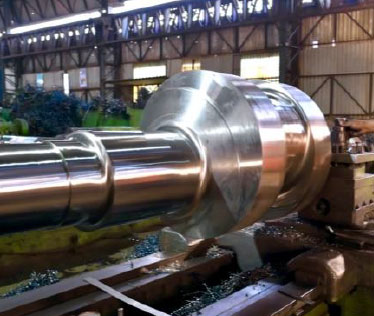
We commonly use CNC turning to produce cylindrical components such as shafts, rods, and pins. In this process, the workpiece rotates while a cutting tool removes material to achieve the desired shape and diameter.
CNC Milling
CNC milling machines use rotating cutting tools to remove material from a stationary workpiece. This process is ideal for creating complex shapes, slots, holes, and surface features.
CNC Drilling
Operators at Prakash Projects use CNC drilling machines to create precise holes in metal components. The process ensures accurate positioning and consistent hole dimensions.
CNC Grinding
Operators use grinding to achieve high surface finish and dimensional accuracy. They often use it as a finishing operation for critical components.
Multi-Axis CNC Machining
Advanced CNC machines can operate on multiple axes simultaneously. This allows manufacturers to create complex geometries and detailed features that would be difficult or impossible with conventional machines.
Applications of CNC Machining in Various Industries
CNC machining is widely used across many industries that require precision-engineered components.
Power Generation Industry
In power plants, critical components such as turbine shafts, rotors, and mechanical assemblies require extremely high precision. CNC machining ensures these components meet strict operational standards.
Oil and Gas Industry
The oil and gas sector requires durable and high-performance equipment such as drilling tools, valves, and pressure components. CNC machining ensures these parts are manufactured with high accuracy and reliability.
Automotive Industry
Automotive manufacturers rely on CNC machining to produce engine components, transmission parts, gears, and other critical mechanical components.
Aerospace Industry
In aerospace applications, even the smallest dimensional variation can affect performance and safety. CNC machining provides the precision required to manufacture aircraft components and structural parts.
Heavy Engineering
Industrial machinery used in construction, mining, and manufacturing requires large and robust components. CNC machining ensures these parts meet the required strength and dimensional accuracy.
Quality Control in CNC Machining
Maintaining quality is one of the most critical aspects of CNC machining. Manufacturers must ensure that each component meets the required specifications and performance standards.
Quality control processes may include:
- Dimensional inspection using precision measuring tools
- Surface finish inspection
- Coordinate Measuring Machine (CMM) testing
- Material verification and testing
These quality checks ensure that the final components meet industry standards and customer requirements.
Commitment of Prakash Projects Pvt. Ltd.
Prakash Projects Pvt. Ltd. delivers high-quality engineering solutions through advanced manufacturing technologies and skilled engineering expertise. By utilizing modern CNC machining capabilities, the company ensures precise, reliable, and efficient manufacturing of every component.
The company focuses on maintaining strict quality control standards and continuously improving its manufacturing processes to meet the evolving needs of modern industries. Through innovation and technical expertise, Prakash Projects Pvt. Ltd. provides precision-engineered solutions that support industrial growth and development.
The Future of CNC Machining
As technology continues to advance, CNC machining is becoming even more sophisticated with the integration of automation, robotics, and digital manufacturing systems. Smart manufacturing technologies such as Industry 4.0 are enabling real-time monitoring, improved productivity, and enhanced process control.
Advancements in CNC machining will further improve efficiency, reduce production costs, and enable manufacturers to produce even more complex components with exceptional precision.
Conclusion
CNC machining has become a cornerstone of modern manufacturing due to its ability to produce high-precision components with excellent consistency and efficiency. By combining computer automation with advanced machining techniques, manufacturers can meet the demanding requirements of industries such as power generation, oil & gas, automotive, aerospace, and heavy engineering.
With its commitment to technological advancement, quality, and engineering excellence, Prakash Projects Pvt. Ltd. continues to deliver reliable and high-performance machined components that meet the needs of modern industrial applications.