
Introduction
Prakash Projects Pvt. Ltd. is a prominent engineering and manufacturing company in India known for delivering high-precision heavy engineering components and turnkey industrial solutions. The company has developed integrated manufacturing capabilities that allow complete control of production – from raw material melting to finished machined components.
Integrated manufacturing plays a critical role in industries such as steel plants, mining equipment, power generation, cement plants, and heavy machinery manufacturing, where component reliability, metallurgical quality, and dimensional accuracy are essential.
What is Integrated Manufacturing?
Integrated manufacturing refers to a fully connected production ecosystem where all major production stages are controlled within the same organization. Instead of relying on multiple vendors, the company performs key processes internally.
Typical integrated manufacturing processes include:
- Raw material melting and refining
- Open die forging
- Heat treatment
- Precision machining
- Surface finishing
- Quality testing and inspection
This approach ensures better metallurgical control, improved mechanical properties, and consistent product quality.
Core Manufacturing Infrastructure at Prakash Projects Pvt. Ltd.
1. Engineering & Design Division
The manufacturing cycle begins with in-house engineering and design capabilities. Engineers develop component drawings, manufacturing processes, and load analysis to ensure the product meets the required industrial performance standards.
Key technical capabilities
- CAD based engineering design
- Finite Element Analysis (FEA) for stress and load evaluation
- Reverse engineering of critical machine parts
- Process planning for heavy forged components
This division ensures the correct material grade, forging sequence, and machining allowance are defined before production begins.
2. Steel Melting and Refining Division
An important part of the integrated setup is the steel melting facility, where raw materials are processed and refined to achieve the required chemical composition and metallurgical structure.
Technical features
- Controlled steel melting operations
- Alloy addition for specific mechanical properties
- Slag removal and impurity control
- Casting of ingots for forging operations
The melting division allows precise control over carbon content, alloying elements, and inclusion levels, ensuring high-quality steel suitable for heavy duty industrial applications.
Benefits of in-house melting
- Better traceability of raw material
- Control over metallurgical quality
- Ability to produce customized alloy steel grades
- Reduced dependency on external steel suppliers
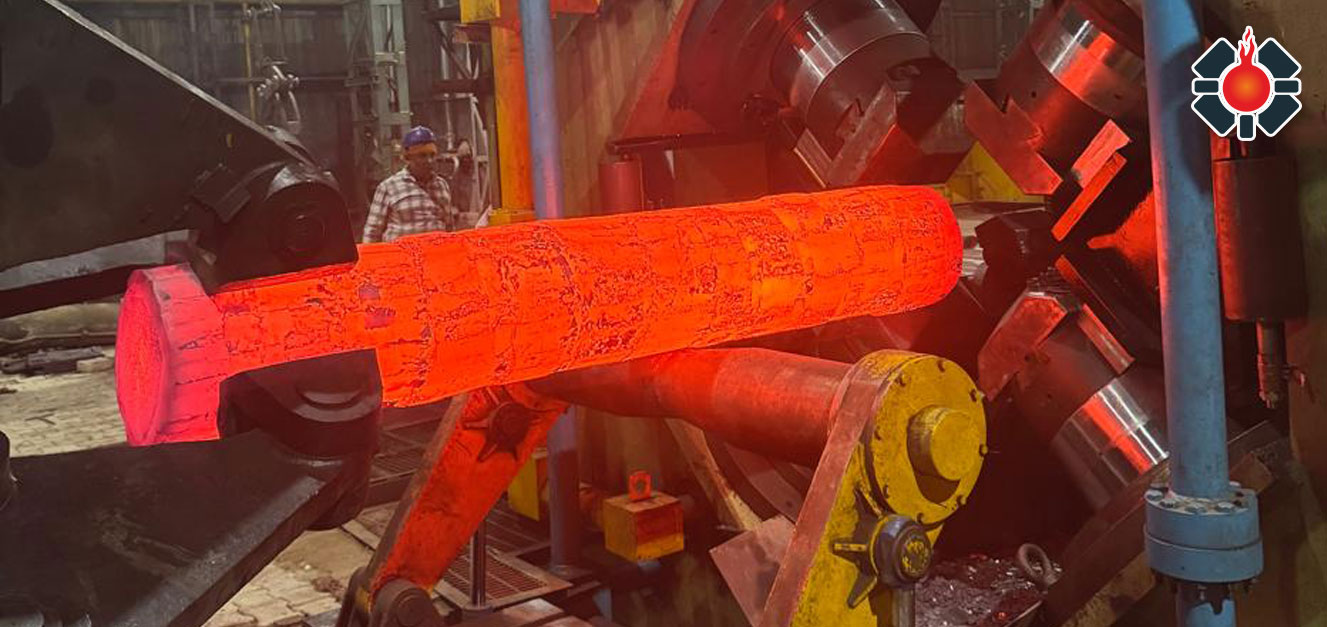
3. Open Die Forging Division
Once the ingots are produced, they are processed in the open die forging shop where the material is plastically deformed to improve its mechanical properties and internal grain structure.
Key forging processes
- Upsetting and drawing of ingots
- Forging of large shafts and cylindrical components
- Ring rolling and disc forging
- Forging of custom heavy engineering components
Forging refines the internal grain flow of steel, resulting in:
- Higher strength
- Improved fatigue resistance
- Better impact toughness
- Enhanced structural integrity
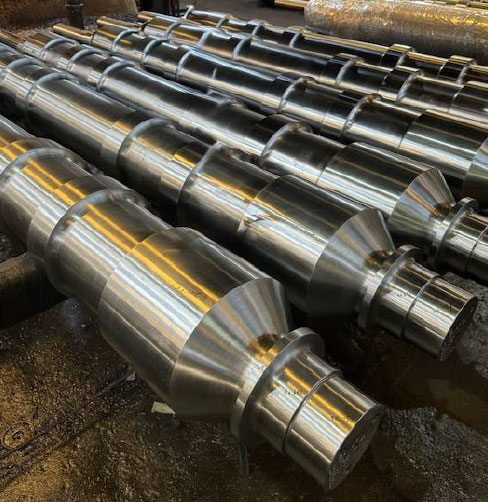
Typical forged components include:
- Heavy industrial shafts
- Gear blanks
- Rolls and mandrels
- Rings and flanges
- Mining and steel plant components
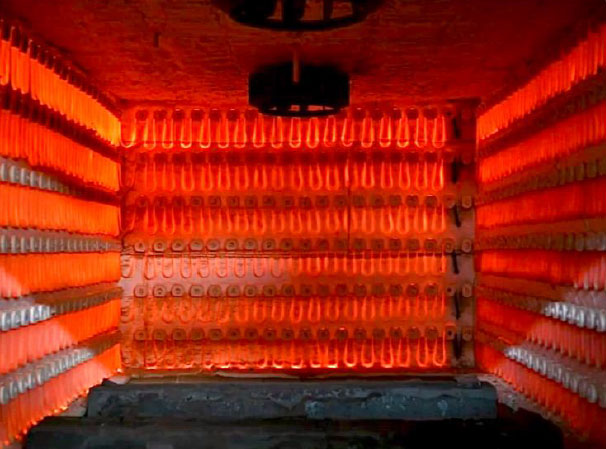
4. Heat Treatment Division
Heat treatment is essential to achieve the required mechanical properties and dimensional stability in forged components.
Major heat treatment processes
- Normalizing
- Annealing
- Quenching and tempering
- Stress relieving
These processes enhance:
- Yield strength
- Wear resistance
- Fatigue life
- Structural stability under heavy loads
Controlled heating and cooling cycles ensure that the steel components perform reliably in demanding industrial environments.
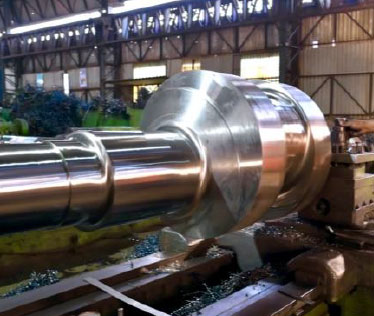
5. Precision Machining Division
After forging and heat treatment, the components undergo precision machining to achieve the required dimensional tolerances and surface finish.
Major machining operations
- CNC turning and milling
- Vertical Turning Lathe (VTL) machining
- Horizontal boring and milling
- Heavy duty lathe operations
- Gear cutting and spline machining
Precision machining ensures:
- Accurate component geometry
- Proper alignment of rotating equipment
- Reduced vibration during operation
- Improved equipment lifespan
6. Quality Assurance and Testing
Quality control is integrated at every stage of the manufacturing process.
Inspection methods
- Ultrasonic Testing (UT)
- Magnetic Particle Testing (MPT)
- Dye Penetrant Testing (DPT)
- Chemical composition testing
- Mechanical property testing
- Dimensional inspection
These procedures ensure that each forged component meets customer specifications and international industrial standards.
Advantages of Integrated Manufacturing
The integrated model used by Prakash Projects offers several important advantages.
Complete Metallurgical Control
In-house melting and forging allow strict control over steel composition and microstructure.
Improved Mechanical Performance
Forged components have superior strength and fatigue resistance compared to fabricated components.
Reduced Lead Time
Controlling the entire production chain reduces delays caused by multiple suppliers.
Enhanced Product Reliability
Integrated inspection and testing ensure consistent quality.
Custom Manufacturing Capability
Special alloy grades and complex forged components can be produced according to customer requirements.
Industrial Applications
The integrated melting, forging, and machining setup enables Prakash Projects to serve multiple heavy industries.
Key sectors served
- Steel plants
- Mining and mineral processing
- Cement plants
- Power generation equipment
- Heavy engineering machinery
Components manufactured through this integrated system are designed to operate in high load, high temperature, and continuous duty environments.
Conclusion
The integrated manufacturing infrastructure of Prakash Projects Pvt. Ltd. demonstrates the strength of modern heavy engineering production. By combining steel melting, open die forging, heat treatment, precision machining, and advanced quality testing, the company ensures superior product performance and reliability.
This fully integrated approach allows the company to deliver high-strength forged components and heavy engineering solutions that meet the demanding requirements of industrial customers across multiple sectors.
One response to “Integrated Manufacturing Capabilities of Prakash Projects Pvt. Ltd.”
Hi, this is a comment.
To delete a comment, just log in and view the post's comments. There you will have the option to edit or delete them.