Prakash Projects Pvt. Ltd.
The forging industry has played a vital role in the development of modern engineering and industrial infrastructure. Forged components are widely used in sectors such as power generation, oil & gas, automotive, aerospace, and heavy engineering due to their superior strength, durability, and reliability. As industries continue to evolve, the demand for stronger, lighter, and more precise components is increasing rapidly.
To meet these growing requirements, forging technology is continuously advancing through innovation, automation, and modern manufacturing practices. Advanced equipment, digital manufacturing systems, and improved metallurgical processes are shaping the future of forging technology.
Prakash Projects Pvt. Ltd. recognizes the importance of technological advancement in the forging industry. By adopting modern manufacturing methods and maintaining strict quality standards, the company aims to contribute to the development of high-performance forged components that meet the demands of future industries.
Evolution of Forging Technology
Forging has been used for centuries as a method of shaping metal through compressive forces. Traditional forging methods relied heavily on manual processes and simple mechanical equipment. Over time, advancements in engineering and manufacturing technologies have transformed forging into a highly precise and efficient industrial process.
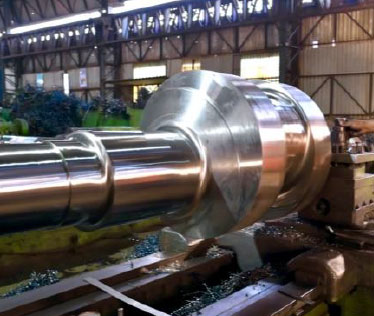
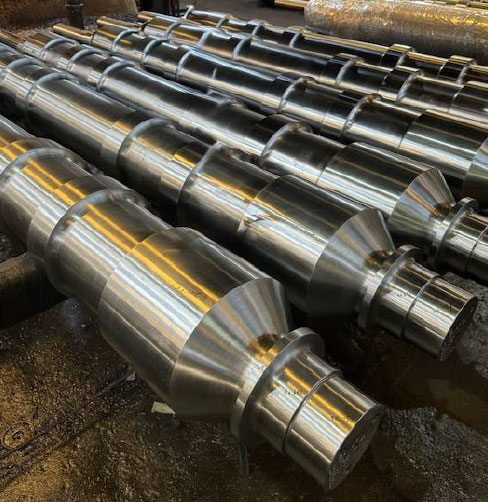
Today, forging processes include advanced techniques such as open die forging, closed die forging, radial forging, and precision forging, which allow manufacturers to produce complex components with high dimensional accuracy and improved mechanical properties.
The continuous development of forging machinery, material science, and digital technologies is shaping the future of this industry.
Key Trends Shaping the Future of Forging Technology
Several emerging trends are influencing the growth and transformation of the forging industry.
Automation and Smart Manufacturing
Automation is becoming a major driver of efficiency in modern forging facilities. Automated forging presses, robotic handling systems, and digital process monitoring help reduce manual intervention and improve production efficiency.
Smart manufacturing technologies enable real-time monitoring of forging parameters such as temperature, pressure, and deformation. This helps manufacturers maintain consistent quality and optimize production processes.
Industry 4.0 and Digital Integration
The adoption of Industry 4.0 technologies is transforming traditional manufacturing systems into intelligent and connected production environments. Digital tools such as data analytics, machine monitoring systems, and predictive maintenance are improving productivity and reducing equipment downtime.
By integrating digital technologies into forging operations, manufacturers can achieve better process control and improved operational efficiency.
Advanced Materials and Metallurgy
The future of forging technology is also influenced by the development of advanced materials and improved metallurgical processes. Modern industries require materials that offer higher strength, better fatigue resistance, and improved performance under extreme conditions.
New alloy compositions and improved heat treatment techniques allow manufacturers to produce forged components that meet these demanding requirements.
Precision and Near-Net-Shape Forging
Modern forging technologies are moving toward near-net-shape manufacturing, where components are produced close to their final dimensions. This approach reduces the need for extensive machining and minimizes material waste.
Precision forging techniques enable manufacturers to produce complex shapes with high dimensional accuracy, improving both efficiency and product quality.
Energy Efficiency and Sustainable Manufacturing
Sustainability is becoming an important focus in modern industrial operations. Future forging technologies aim to reduce energy consumption, improve material utilization, and minimize environmental impact.
Energy-efficient furnaces, improved process control, and optimized production systems help reduce carbon emissions and operational costs.
Benefits of Advanced Forging Technologies
The adoption of modern forging technologies provides several benefits for manufacturers and industries.
Improved Product Strength
Forging enhances the internal grain structure of metals, resulting in stronger and more durable components.
Higher Production Efficiency
Automated forging systems and optimized production processes help increase productivity while maintaining high quality standards.
Reduced Material Waste
Near-net-shape forging techniques reduce the amount of material removed during machining, improving overall resource efficiency.
Better Product Reliability
Advanced process control and quality monitoring systems ensure consistent product performance and reliability.
Role of Innovation in the Forging Industry
Innovation is a key factor in the continued growth of the forging industry. Manufacturers are investing in new technologies, advanced machinery, and research in material science to develop better forging solutions.
Technologies such as simulation software allow engineers to analyze forging processes before actual production begins. This helps optimize tool design, improve process efficiency, and reduce production defects.
Research in metallurgy also helps improve the mechanical properties of forged components, making them suitable for high-performance industrial applications.
Commitment of Prakash Projects Pvt. Ltd.
Prakash Projects Pvt. Ltd. is dedicated to staying at the forefront of modern manufacturing technologies. By adopting advanced forging methods, maintaining strict quality control, and focusing on continuous improvement, the company aims to meet the evolving needs of modern industries.
The company’s commitment to precision engineering, innovation, and customer satisfaction enables it to deliver reliable and high-performance forged components for various industrial applications.
With a strong focus on technological advancement and operational excellence, Prakash Projects Pvt. Ltd. continues to contribute to the growth and modernization of the forging industry.
Conclusion
The forging industry is entering a new era driven by technological innovation, automation, and digital transformation. Future forging technologies will focus on improving efficiency, reducing environmental impact, and producing stronger and more precise components.
Advancements in automation, smart manufacturing, advanced materials, and precision forging will continue to shape the future of industrial manufacturing.
With its dedication to innovation, quality, and engineering excellence, Prakash Projects Pvt. Ltd. is well-positioned to adapt to these technological advancements and continue delivering high-quality forged solutions for modern industrial applications.